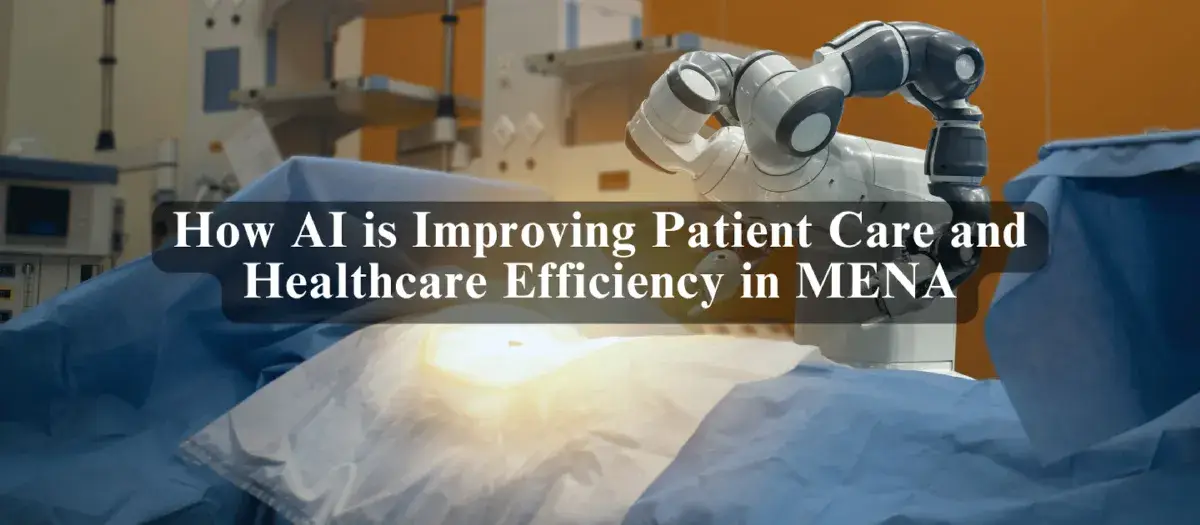
How AI is Improving Patient Care and Healthcare Efficiency in MENA
Discover how AI is transforming healthcare in the MENA region, enhancing patient care and efficiency through innovative data analytics and medical intelligence.
Healthcare Efficiency in MENA
Artificial intelligence (AI) is revolutionizing the healthcare landscape across the Middle East and North Africa (MENA) region. With its ability to analyze vast amounts of data and deliver insights, AI is enhancing patient care and improving the overall efficiency of healthcare systems. As healthcare providers in the MENA region increasingly adopt AI technologies, the potential for innovation and improved patient outcomes grows exponentially.
What Role Does AI Play in Healthcare in the Middle East?
Understanding AI in Healthcare
AI in healthcare refers to the use of artificial intelligence technologies to analyze patient data and improve the delivery of medical services. By leveraging machine learning and predictive analytics, AI identifies patterns that help healthcare professionals make informed decisions. In the Middle East, the integration of AI into healthcare systems is seen as a significant step towards digital transformation. AI solutions are not only enhancing diagnostic capabilities but also personalizing patient care, ensuring that treatments are tailored to individual needs.
Moreover, the understanding of AI in healthcare extends beyond mere data analysis. It encompasses the application of algorithms and smart technologies that assist in various health-related tasks, such as patient monitoring and health record management.
By automating routine processes, AI frees up valuable time for medical professionals, allowing them to focus on clinical decision-making and patient interactions. This growing understanding of AI's role emphasizes its potential to reshape the healthcare landscape, making it more efficient and responsive to patient needs.
AI-powered Solutions for Patient Care
AI-powered solutions are becoming integral in enhancing patient care by providing tools that streamline healthcare delivery. From chatbots that assist patients with inquiries to advanced imaging technologies that improve diagnostic accuracy, these solutions harness the power of AI to create a more efficient healthcare experience. In the MENA region, hospitals are increasingly utilizing AI tools to enhance communication between patients and providers, ultimately leading to better health outcomes.
These AI-driven solutions also enable healthcare professionals to monitor patients remotely, facilitating ongoing care outside traditional clinical settings. Telemedicine platforms powered by AI allow for real-time consultations and follow-ups, particularly beneficial for chronic disease management. As the healthcare industry in the Middle East embraces these innovations, the potential to improve patient care increases, leading to a more proactive and personalized approach to health management.
Integration of AI Technologies in Healthcare Systems
The integration of AI technologies into healthcare systems is a transformative process that enhances operational efficiency and patient care. In the MENA region, healthcare facilities are adopting electronic health records (EHR) and AI analytics to manage patient data effectively.
This integration not only streamlines workflow but also facilitates better decision-making by providing healthcare professionals with comprehensive patient insights. As organizations leverage AI, they can identify trends and improve care protocols, ultimately enhancing the quality of healthcare services.
Furthermore, the incorporation of AI into healthcare systems leads to improved interoperability between various health services. By enabling seamless data sharing and communication among providers, AI fosters a collaborative environment that enhances patient management and care continuity.
As the region's healthcare infrastructure evolves, the successful integration of AI technologies will play a crucial role in shaping the future of healthcare delivery, making it more efficient and responsive to the needs of the population.
How is AI Improving Patient Outcomes in the MENA Region?
Predictive Analytics and Patient Care
Predictive analytics powered by AI is revolutionizing patient care in the MENA region by enabling healthcare providers to anticipate patient needs and outcomes. By analyzing historical data, AI algorithms can identify risk factors for various diseases, allowing for early intervention and personalized treatment plans. This proactive approach significantly improves patient outcomes by reducing complications and ensuring timely care. Hospitals in the Middle East are increasingly leveraging predictive analytics to manage population health effectively.
Moreover, predictive analytics facilitates better resource allocation within healthcare facilities. By understanding patient trends and needs, healthcare organizations can optimize staffing and equipment use, leading to enhanced efficiency.
As predictive analytics continues to evolve, its role in improving patient care and outcomes becomes increasingly vital, fostering a healthcare environment that is both data-driven and patient-centered. This transformation reflects the broader potential of AI to enhance the quality of healthcare services across the region.
AI-driven Decision Making in Medical Diagnostics
AI-driven decision-making is reshaping the landscape of medical diagnostics in the MENA region. AI tools, such as machine learning algorithms, analyze medical data with exceptional precision, assisting healthcare professionals in diagnosing conditions more accurately and quickly.
By leveraging AI in diagnostics, hospitals can reduce the incidence of misdiagnosis, which is critical for effective treatment and improved patient outcomes. This technological advancement is particularly significant in a region where access to specialized medical expertise may be limited.
Furthermore, AI's ability to process and interpret vast amounts of data allows for more informed clinical decision-making. Healthcare providers can utilize AI-driven insights to determine the most effective treatment plans for patients, enhancing the overall quality of care.
As the integration of AI technologies continues to advance, the MENA region's healthcare systems can expect to see profound improvements in diagnostic accuracy, ultimately leading to better health outcomes for patients across diverse populations.
Improving Chronic Disease Management with AI
AI is playing a pivotal role in improving the management of chronic diseases in the MENA region. With the increasing prevalence of conditions such as diabetes and hypertension, healthcare providers are utilizing AI tools to monitor patients' health metrics and develop personalized care plans.
These AI-driven solutions allow for continuous monitoring, enabling timely interventions and adjustments to treatment regimens. Consequently, patients benefit from improved management of their conditions, leading to better overall health outcomes.
In addition, AI technologies empower patients to take an active role in their health management. Mobile applications and wearables equipped with AI capabilities provide patients with real-time feedback on their health status, encouraging adherence to prescribed treatments.
As the healthcare industry in the MENA region embraces AI for chronic disease management, it is fostering a more proactive and engaged approach to patient care, which is essential for reducing the burden of chronic diseases on healthcare systems.
What Innovations are Shaping Healthcare in the Middle East?
Telemedicine and Remote Patient Monitoring
Telemedicine and remote patient monitoring are innovative solutions transforming healthcare delivery in the Middle East. By utilizing AI-powered platforms, healthcare providers can offer consultations and follow-up care to patients without the need for in-person visits. This is particularly beneficial for individuals in remote areas who may have limited access to healthcare facilities. Telemedicine not only reduces the burden on hospitals but also enhances patient convenience and satisfaction.
Remote patient monitoring, enabled by AI technologies, allows healthcare professionals to track patients' health metrics in real-time. Wearable devices and mobile applications provide continuous data on vital signs, enabling timely interventions when necessary.
This innovation leads to improved health outcomes for patients, especially those managing chronic conditions. As telemedicine and remote monitoring continue to evolve, they are setting new standards for healthcare delivery in the region, making it more accessible and efficient.
Innovative Healthtech Startups in MENA
The emergence of innovative healthtech startups in the MENA region is driving significant advancements in healthcare delivery. These startups leverage AI technologies to develop solutions that address various healthcare challenges, from patient management to data analytics. By focusing on the unique needs of the region, these companies are creating tailored solutions that improve patient care and enhance healthcare efficiency.
Moreover, the growing healthtech ecosystem in MENA is fostering collaboration between startups, healthcare providers, and government agencies. This collaborative environment encourages the development of cutting-edge healthcare solutions that can be rapidly implemented across the region. As these startups continue to innovate and grow, they contribute significantly to the transformation of healthcare services, ensuring that the region remains at the forefront of digital health advancements.
The Future of Healthcare Services with AI
The future of healthcare services in the MENA region is poised for remarkable transformation, largely driven by advancements in AI technologies. As healthcare providers increasingly adopt AI solutions, we can expect improvements in patient care, operational efficiency, and data management. The integration of AI into healthcare systems will allow for more personalized and responsive services, catering to the unique needs of patients and communities.
Additionally, as AI continues to evolve, its applications in healthcare will expand, offering new possibilities for disease prevention, diagnosis, and treatment. The potential of AI to enhance healthcare delivery is enormous, promising a future where medical services are not only more efficient but also more accessible to all populations. By harnessing the power of AI, the MENA region can establish a healthcare model that prioritizes patient outcomes and fosters innovation, ensuring a healthier future for its citizens.
How Can Healthcare Management Benefit from AI?
Streamlining Healthcare Operations with AI
AI has the potential to streamline healthcare operations by automating routine tasks and improving workflows. In the MENA region, healthcare facilities are increasingly utilizing AI technologies to manage administrative tasks such as scheduling, billing, and patient record management. By automating these processes, healthcare organizations can reduce operational costs and improve efficiency, allowing staff to focus on patient care rather than administrative burdens.
Moreover, AI-driven analytics can help healthcare managers identify inefficiencies in operations, enabling them to implement targeted improvements. By analyzing data from various sources, AI provides valuable insights into resource utilization, patient flow, and staff performance.
This data-driven approach enhances decision-making, ensuring that healthcare facilities operate at optimal efficiency. As the healthcare industry in the region embraces AI solutions, the overall quality of care delivered to patients is expected to improve significantly.
Data Management and AI Integration
Effective data management is crucial for the success of healthcare systems, and AI integration plays a pivotal role in achieving this goal. In the Middle East, healthcare providers are increasingly adopting AI technologies to manage electronic health records (EHR) and other patient data. By utilizing AI tools, healthcare organizations can enhance data accuracy and accessibility, leading to better-informed clinical decisions and improved patient outcomes.
Furthermore, AI integration facilitates the analysis of large datasets, helping healthcare providers identify trends and patterns that inform care strategies. By leveraging AI for data management, healthcare facilities can ensure that they are not only compliant with regulations but are also utilizing data to enhance the quality of care delivered to patients.
As the region continues to invest in AI technologies, the potential for improved data management in healthcare will be realized, ultimately benefiting the entire healthcare ecosystem.
Improving Efficiency in Healthcare Facilities
Improving efficiency in healthcare facilities is a primary goal for organizations across the MENA region, and AI technologies are proving to be invaluable in achieving this objective. By implementing AI solutions, healthcare providers can streamline processes such as patient intake, treatment planning, and discharge procedures. This increased efficiency not only enhances the patient experience but also empowers healthcare staff to deliver quality care more effectively.
Additionally, AI-driven tools can assist in resource allocation, ensuring that healthcare facilities are adequately staffed and equipped to meet patient demands. By analyzing patient flow and operational data, AI enables managers to optimize scheduling and resource distribution, reducing wait times and improving overall service delivery.
As healthcare facilities continue to adopt AI technologies, the efficiency of operations is expected to improve significantly, leading to a more responsive and effective healthcare system across the MENA region.
What are the Challenges of AI Implementation in Healthcare?
Addressing Data Privacy and Security Concerns
One of the critical challenges in the implementation of AI in healthcare is addressing data privacy and security concerns. With the increasing reliance on electronic health records (EHR) and other digital tools, safeguarding patient data has become paramount. In the MENA region, healthcare providers must comply with regulations and ensure that AI technologies are designed with robust security measures to protect sensitive patient information. Failure to address these concerns can undermine patient trust and hinder the adoption of AI solutions.
Moreover, as AI technologies become more integrated into healthcare systems, the potential for cyber threats increases. Healthcare organizations must invest in advanced security protocols and staff training to mitigate these risks. By prioritizing data privacy and security, healthcare providers can foster a culture of trust and encourage patients to engage with AI-driven solutions that enhance their care experience. This focus on security is essential for the successful implementation of AI in the healthcare ecosystem.
Overcoming Resistance to AI in the Healthcare Ecosystem
Resistance to AI in the healthcare ecosystem presents another significant challenge to its successful implementation. Many healthcare professionals may be hesitant to embrace AI technologies due to concerns about job displacement or the reliability of AI-driven solutions.
In the MENA region, fostering a culture that encourages collaboration between human expertise and AI tools is crucial. By emphasizing the complementary nature of AI and healthcare professionals, organizations can alleviate fears and promote acceptance.
Additionally, ongoing education and training programs can help healthcare staff understand the benefits of AI technologies. By demonstrating how AI can enhance clinical decision-making and improve patient outcomes, organizations can build support for AI initiatives. As resistance diminishes, the healthcare ecosystem can fully leverage the potential of AI, leading to a more efficient and effective healthcare delivery model throughout the region.
Scalability of AI Solutions in Healthcare
The scalability of AI solutions in healthcare is a critical consideration for organizations in the MENA region. As healthcare systems look to adopt AI technologies, they must ensure that these solutions can be implemented across diverse settings without compromising quality or performance. Scalability involves not only the technical aspects of AI implementation but also the ability to adapt solutions to meet the unique needs of different healthcare facilities and patient populations.
Moreover, successful scalability requires collaboration among stakeholders, including healthcare providers, technology developers, and policymakers. By fostering partnerships that prioritize the needs of patients and providers, the region can create a healthcare ecosystem that supports the widespread adoption of AI technologies. As AI solutions become more scalable, the potential to enhance patient care and improve healthcare efficiency across the MENA region will be realized, ultimately leading to a healthier population.
What is the Future of AI in Healthcare across MENA?
Long-term Predictions for AI in Patient Care
The future of AI in patient care across the MENA region holds promising long-term predictions. As technology continues to advance, we can anticipate a growing integration of AI in various aspects of healthcare delivery, including diagnostics, treatment planning, and patient management. This evolution will lead to more personalized care, where treatments are tailored to individual patient needs based on comprehensive data analysis and predictive analytics.
Furthermore, AI’s ability to analyze vast datasets will enable healthcare providers to identify trends and improve public health strategies. By leveraging AI technologies, healthcare systems in the MENA region can develop proactive approaches to disease prevention and management, ultimately leading to better health outcomes for communities. As we look toward the future, the ongoing evolution of AI in patient care will play a crucial role in shaping a more efficient and effective healthcare landscape throughout the region.
The Evolution of Healthcare Infrastructure with AI
The evolution of healthcare infrastructure with AI is set to transform the way healthcare is delivered in the MENA region. As organizations increasingly adopt AI technologies, we can expect significant improvements in operational efficiency, data management, and patient care. AI will enable healthcare facilities to optimize their workflows and enhance resource allocation, ensuring that patients receive timely and effective care.
Moreover, the integration of AI into healthcare infrastructure will promote interoperability among different systems, facilitating better communication and coordination among providers. This collaborative approach will enhance patient management and improve care continuity, leading to better health outcomes.
As healthcare infrastructure continues to evolve with AI, the MENA region is poised to become a leader in innovative healthcare delivery, setting new standards for quality and efficiency.
Harnessing the Power of AI for Holistic Patient Care
Harnessing the power of AI for holistic patient care is a fundamental goal for healthcare systems across the MENA region. By leveraging AI technologies, healthcare providers can adopt a more comprehensive approach to patient management, addressing not only physical health but also mental and emotional well-being. AI tools can assist in identifying patients’ unique needs, allowing for more personalized treatment plans that consider the whole person.
Additionally, AI can facilitate better communication and collaboration among healthcare providers, ensuring that all aspects of a patient's care are coordinated effectively. This holistic approach to healthcare delivery can lead to improved patient satisfaction and outcomes, as individuals receive more tailored care that aligns with their specific circumstances. As the MENA region continues to embrace AI technologies, the potential for achieving holistic patient care becomes increasingly attainable, ultimately contributing to healthier communities.
Frequently Asked Questions (FAQs)